
Shape change
Change needs direction. And participation.
A new strategy alone does not change how people work together. I help leaders and organisations make change understandable, enable participation and support the transition into everyday practice.
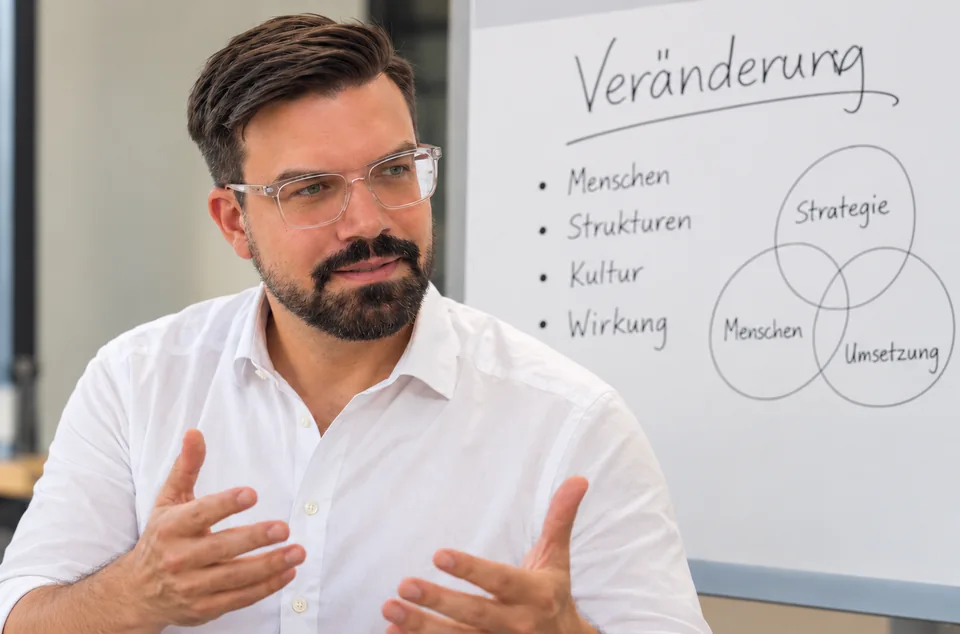
What this involves
Change management connects the direction of a change with its organisational and human implementation. It involves clear decisions, appropriate communication, participation and the integration of new working practices.
When this support is useful
- A direction has been agreed, but everyday work largely remains unchanged.
- Different interests and expectations make collaboration difficult.
- Uncertainty or resistance is visible, but its causes are not yet properly understood.
Working together
From your situation to the next step.
01
Clarify the starting point and assignment
We examine objectives, structures, culture and previous experiences of change. Together with those responsible, we clarify what should change and where there is genuine scope to shape it.
02
Enable meaningful participation
Stakeholders are involved early. Communication explains what is changing, why it is changing and what it means in practice. Concerns are taken seriously as indicators of interests, risks and unanswered questions.
03
Test and embed change
A clear plan connects decisions, participation and implementation steps. Feedback from practice informs the process. New routines are reviewed, adjusted and assigned to people who will sustain them.
What we work towards
- A clear picture of the intended change and a structured implementation plan
- A stakeholder and communication plan
- Practical opportunities for participation and clear decision-making processes
- Agreements on implementation, feedback and embedding the change
We agree on the precise scope and intended outcomes at the start of the assignment.
Frequently asked questions
How do you approach resistance?
I first ask what is behind it: missing information, unsuitable conditions, conflicting objectives or understandable concerns. Different causes call for different responses. Participation does not mean that every decision is open to negotiation.
Do you use one fixed change model?
Structured models provide orientation. The choice and application depend on the assignment and context. A model cannot replace conversations with the people affected or checking whether an action works in practice.
Related services
Depending on your needs, the services complement one another. Roles and objectives remain clearly agreed throughout.
Let us clarify what you need.
Tell me about your situation. In an initial conversation, we clarify what you need and whether my support is a good fit.